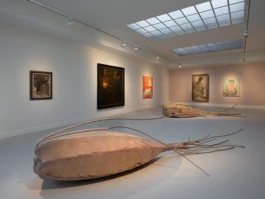
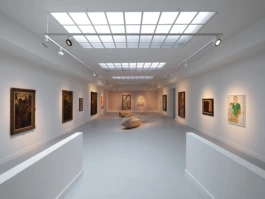
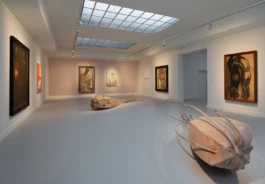
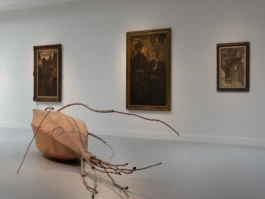
Permekemuseum (satelietmuseum van Mu.Zee), Jabbeke, Belgium
Curated by Inne Gheeraert

A house full of rooms shared with your family, blood relatives, or a chosen family can be a place of peace and safety, of quiet tension, or of love.
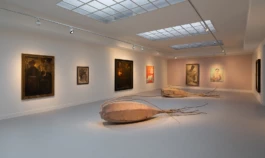
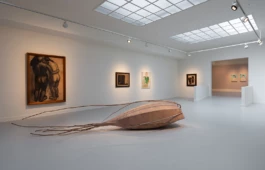
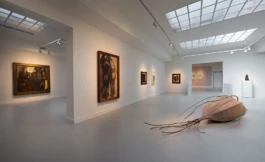
Constant Permeke explored what it means to be human and what connects people to one another. To capture psychology and human dynamics, he distorted his figures. Through the solid materiality of thick layers of paint and rubbed charcoal, or through delicate pencil lines and thinned turpentine paint, he navigated a spectrum between stubborn determination, tenderness, and spirituality. His idiosyncratic figures, with their vulnerable postures, seem to resign themselves to life. Trapped and constrained in a stifling world, they vibrate with raw, vital energy yet also breathe melancholy, surrender, understanding, and devotion.
Familial and interpersonal relationships run like a thread through Permeke’s artistic practice. His work conveys a sense of togetherness, warmth, and domestic intimacy, the longing and anticipation surrounding birth, and the raw absence and loneliness of loss. Family life was deeply important to him. Together with his wife Marietje, Permeke had six children, two of whom died at a young age.
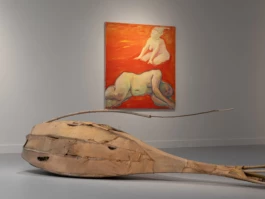
The search for connection remains a resonant theme for artists today. Several leading artists invite critical reflection on this subject. As a “painter of the people,” Alice Neel (US, 1900–1984) was a sharp observer of human relationships and social inequality. Like Permeke, she painted people from her surroundings—family, friends, and those living at the margins of society. Her work presents an unidealized view of parenthood, often stripped of tenderness. Maria Lassnig (AT, 1919–2014) likewise portrayed unfiltered, raw scenes from daily life among couples and families, always beginning from her own bodily experience. The series of portraits by Birde Vanheerswynghels (BE, 1986) reveals the vulnerability of her own chosen family and queer community. Anne Daems (BE, 1966) observes her father and the changing vegetation in her video installation My father’s garden. For her, the garden forms a harmonious microcosm—a place where, following the slow rhythm of the seasons, she reconnects with her family in the here and now. Tom Hallet (BE, 1990) seeks to capture the cosmic bond between parent and child through the cycles of nature, where the notion of care plays a central role.
Curated: Inne Gheeraert
Participating: Alice Neel, Maria Lassnig, Birde Vanheerswynghels, Anne Daems, Tom Hallet